
Why Fall and Winter Are the Best Time for Laser Treatments

Laser treatments are among the most requested services in aesthetic medicine, and many patients book them whenever a free afternoon opens up. However, timing often deserves more thought than that. The season you choose affects how safely many lasers can work on your skin.
At Aesthetica by Ridenour in St. Louis, MO, fall marks the start of laser season. Lasers work best on skin that isn't actively fighting the sun, and after a long summer, the colder months finally give it a break.
Knowing how sunlight and lasers interact makes it easier to plan treatments around your skin and your schedule.
Why Cooler Months Are Ideal for Laser Treatments
Fall and winter are the best time for most laser treatments because UV exposure drops, summer tans fade, and downtime is easier to work around. Cooler weather means fewer pool days and outdoor plans competing with your recovery. Starting in fall gives multi-session plans time to finish before summer returns. By the time summer is back, your results have already settled in.
Why the Sun Changes the Laser Equation
Many lasers find their target by color. Devices that treat brown spots or remove hair are drawn to melanin, the pigment that darkens your skin when you tan. Extra melanin from summer competes with the target for the laser's energy. That raises the risk of burns and post-inflammatory hyperpigmentation, the dark patches that can appear after irritated skin heals. The American Academy of Dermatology advises laser patients to avoid tanning and to tell their provider about any recent tan.
Lasers aren't off-limits in July and August: certain treatments can be done year-round with strict sun protection. Your options narrow in summer, though, and the margin for error gets smaller.
Here's what most people miss: the sun causes most of the damage lasers are designed to treat. According to the Skin Cancer Foundation, UV radiation causes 90% of visible skin aging. In St. Louis, the average peak UV index falls from 9 in July to 2 in December. Lower UV means your new results are less likely to be undone while your skin heals.
What Is Laser Stacking?
Laser stacking combines two or more technologies in one personalized plan so each device treats what the others can't. Your skin rarely has just one concern. Redness, sun damage, uneven texture and fine lines often show up together, and each responds to a different type of energy.
A typical stack might pair Fraxel® DUAL for texture and fine lines with Vbeam® for rosacea-related redness, then add PicoWay® for stubborn dark spots.
A patient with mild sun spots and nothing else, on the other hand, may only need a short series of BBL. The goal is the smallest combination that fully addresses your concerns, so every technology in your plan has a job.
Building Your Fall-to-Spring Skin Stack
We plan every stack, including Aesthetica's seasonal Fall Skin Stack, during a one-on-one consultation, but most follow a similar seasonal rhythm.
October: Clear the Summer Damage
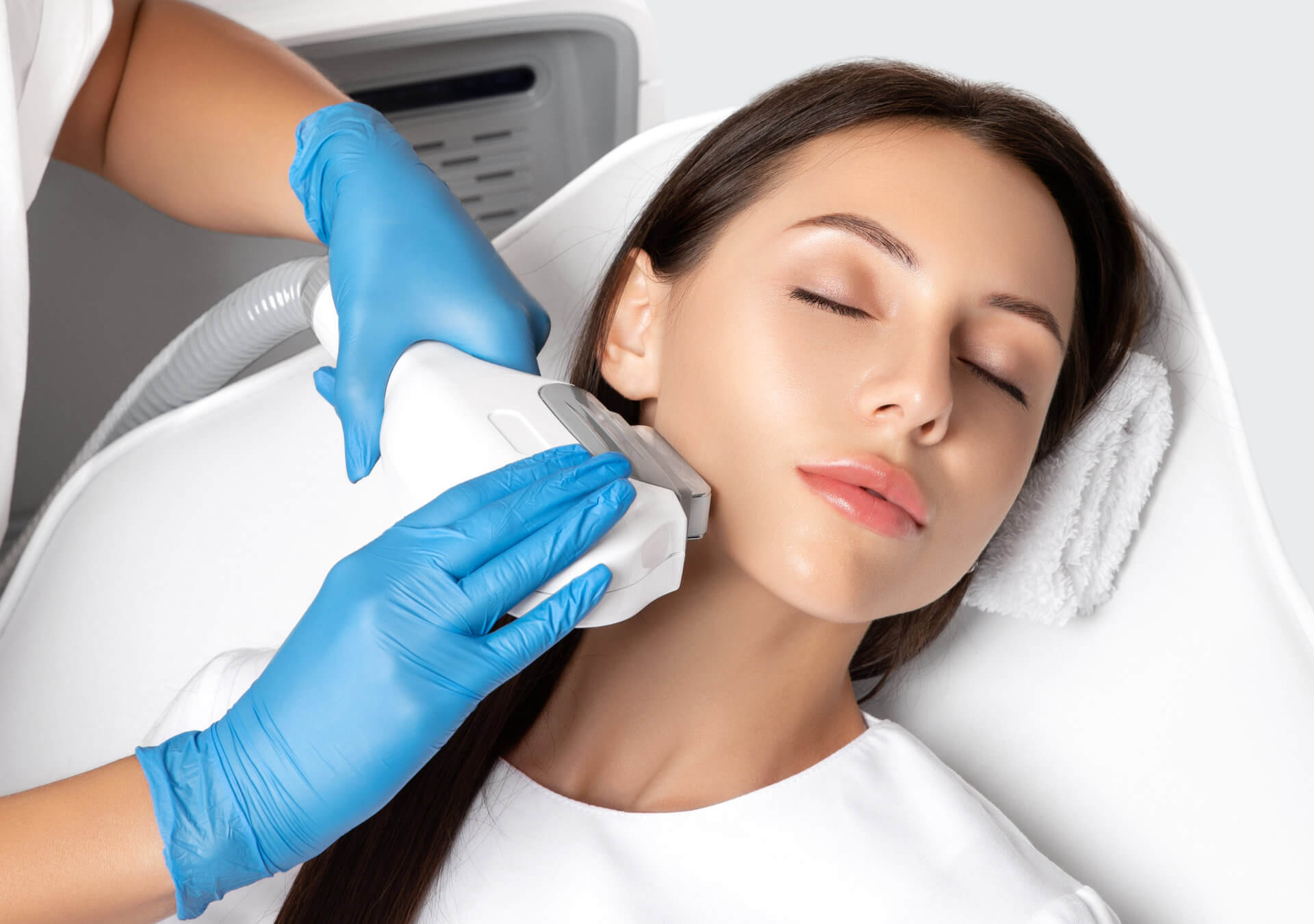
BBL® HERO is often the foundation. This broadband light treatment targets unwanted pigment and visible vessels while supporting collagen production. Most patients have a little pinkness for a day or two, so sessions fit easily around work and fall weekends. If you're curious why patients come back for it year after year, the science behind BBL explains it well.
November and December: Plan Around the Holidays
Deeper concerns like acne scars and fine lines call for resurfacing. Fraxel DUAL typically brings two to three days of visible healing, which lines up nicely with Thanksgiving or winter break. Matrix RF, a radiofrequency microneedling treatment, can be added to improve texture and firmness. Treated areas on the neck and chest are also easier to keep covered and out of the sun. Cold air can make healing skin feel tighter, so a gentle moisturizer becomes part of your aftercare.
January and February: Treat What's Left
Once surface damage fades, remaining concerns are easier to see. PicoWay goes after pigment that BBL didn't fully clear. Its pulses, measured in trillionths of a second, create a photoacoustic effect that shatters pigment into tiny fragments your body clears on its own, with less heat than older pigment lasers. Vbeam calms redness that cold wind and dry indoor heat tend to aggravate. Winter is also a smart time to begin laser hair removal, since most patients need six to eight sessions and you'll want to finish before shorts weather.
March: Protect Your Results
Before UV climbs again, Clear + Brilliant®, a low-intensity fractional laser, refreshes tone and texture with minimal downtime. Pair it with daily sunscreen. The American Academy of Dermatology recommends a broad-spectrum formula with SPF 30 or higher, reapplied every two hours when you are outdoors.
Why Laser Results Depend on Your Provider
With so many devices on the market, the person deciding which technologies to combine and in what order has the biggest impact on your results. At Aesthetica, Brock D. Ridenour, MD, FACS, a dual board-certified facial plastic surgeon, makes those decisions and has been in private practice in St. Louis since 2003. He directed the Division of Facial Plastic Surgery at Washington University in St. Louis for more than a decade and has led multiple physician workshops on laser and radiofrequency technologies. Castle Connolly has named him a Top Doctor, an honor reserved for the top 7% of specialists. Aesthetica's nurse providers, including Olivia Reimer, RN, and Alyssa Krumgalz, RN, follow his protocols, adjusting each setting to your skin type and how your skin responds over time.
You can pair laser treatments with regenerative therapies like exosomes to support healing and collagen renewal.
Find Out Which Laser Treatment Is Right for Your Skin
Fall and winter offer the safest window to correct sun damage before UV levels rise again. The right combination depends on your skin, your concerns and your calendar. At your Aesthetica by Ridenour consultation, the team will assess your skin and plan treatments around your calendar. To find out which combination of technologies fits your skin, reach out through our contact form.
Further Reading








Contact us
Ready to discover what's possible? Schedule a consultation with our team and learn how we can help you achieve your aesthetic goals.