
What Age Should You Start Neurotoxins?
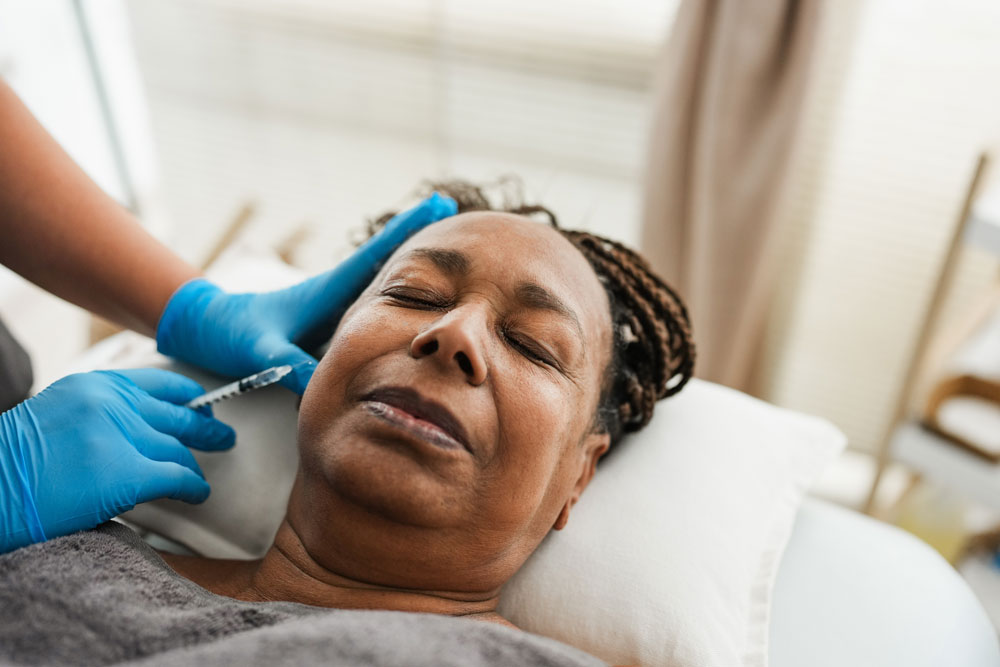
One of the most common questions in aesthetics is "When should I start Botox?" And while the answers online range from “as soon as you are 21” to “after you see deep wrinkles”, the real answer is less straightforward. Everyone has differences in how their skin ages, and deeper structural factors also make a difference in the proper timing of any aesthetic treatment.
At Aesthetica by Ridenour in St. Louis, every treatment recommendation begins with a personal conversation and detailed assessment. Our medical director, Dr. Brock Ridenour, is a double board-certified facial plastic surgeon with over 30 years of experience in facial aesthetics. His approach is to understand each person’s facial structure and concerns before recommending a course of action.
How Wrinkles Form
Dynamic wrinkles (the type of wrinkles that are treated with neurotoxins) happen with repeated facial muscle movement. Every time you squint, frown, smile or raise your eyebrows, the muscles beneath your skin work hard to create the expression. These movements naturally crease the skin above the muscles as it accommodates the movements.
The same muscle contractions repeated over many years can cause wrinkles and lines to be more noticeable in the area, and reduced skin quality from lost collagen can make the face look more aged. Eventually, lines can become what are called static wrinkles, which are etched into the skin and do not disappear even when your face is relaxed.
Interested in learning more about how neurotoxins work? Check out our post on the science behind neurotoxins.
How Does Skin Aging Impact Neurotoxin Timing?
Neurotoxins reduce the intensity and frequency of the muscle contractions that cause the skin to fold. The skin is allowed to stay smooth rather than continually creasing. Because of this, the ideal window for starting treatment will be more about a patient’s particular goals and their current stage of aging. We will look at factors like how deeply the wrinkles are already etched in before recommending neuromodulators.
Neurotoxins by Decade
Botox in Your 20s
While neuromodulators are often associated with older individuals between their 30s and 50s, neuromodulator use showed an increase of 71% between 2019 and 2022. The strategy during this time period is usually preventative. By observing the way the muscles move and predicting the locations of future wrinkles, small doses can be injected to lessen movement and help prevent wrinkles. The suitability of starting preventative Botox in your 20s will depend on your goals and your doctor’s recommendations.
Botox in Your 30s
By your 30s, you may have lost enough collagen that you will start to notice your first lines between your eyebrows or at the corners of your eyes. This is a common time to start seeing fine lines and the beginnings of static lines.
You can test whether your lines are becoming static by relaxing your face as you look in the mirror. If you see set lines where your expression lines form, dynamic lines may be becoming static lines from years of creasing and reduced collagen production. This is a common time to start thinking about neuromodulators. These products can be used at this point to keep static wrinkles from getting deeper by minimizing the impact of facial expressions.
Botox in Your 40s and Beyond
Most people have a combination of dynamic and static wrinkles by their 40s. According to the ISAPS 2024 Global Survey, the age group between 35 and 50 accounts for 47% of all neurotoxin treatments performed worldwide, making this the most active demographic for this treatment.
However, trends are not a good reason to make this decision for yourself. It is important to choose treatments on a case-by-case basis. If you and your doctor both feel that neuromodulators are a good way to treat your signs of aging, this is a better indication of candidacy than your age.
Some Signs Your Skin May Be Ready for Neurotoxins
- Lines That Linger After Expression: If you are starting to notice static wrinkles on your forehead, around your eyes, or between your brows, neurotoxin treatments may be able to make a difference.
- Family Patterns in Wrinkle Formation: Genetics influence how your skin ages. If your parents developed deep forehead lines or crow’s feet at a relatively young age, you may benefit from earlier intervention.
- Naturally Expressive Facial Movement: People who communicate with a lot of facial animation tend to develop lines sooner. Frequent raising of the eyebrows, deep squinting or habitual frowning all create more repetitive muscle contractions, which accelerate line formation.
- You Want Subtle Maintenance: Neurotoxins are a good maintenance tool, but are not a permanent option.
What to Look for in a Neurotoxin Provider
Honest, Patient-Centric Recommendations
The best providers are those who value honesty and transparency, and will tell you when certain treatments may be beneficial, and (just as important) when they may not be. At Aesthetica by Ridenour, every recommendation is built around the patient, considering their aesthetic aims both in the short and the long term, and their facial anatomy. If neurotoxins are not the right fit, we will let you know.
Medical Oversight
Neurotoxin treatments should always be performed under the direction and oversight of a qualified physician. Because so many practices today lack a physician or surgeon on their staff, it is important to verify this before choosing a provider. Dr. Brock Ridenour is a plastic surgeon who is double board-certified by the American Board of Facial Plastic and Reconstructive Surgery and the American Board of Otolaryngology. He oversees all of the treatments provided at Aesthetica by Ridenour in order to keep a high standard of quality and care in his practice.
Injectors Who Can Provide Natural-Looking Results
The "frozen" look that some people associate with Botox is a technique issue rather than an issue with the product. When decisions about injection placement and dosing are made with consideration for a patient’s facial anatomy, results look refreshed rather than restrictive.
Our expert aesthetic nurse providers have performed thousands of neurotoxin treatments. They know exactly where to place each injection for results that are smooth and natural-looking. We also offer both Botox and Dysport to give our patients more flexibility in their results and treatment styles.
Consultations That Put You First
Timing is personal, and so is every other part of neuromodulator treatments. During your consultation, we will evaluate your muscle movement patterns to see how muscle contractions affect the skin. We plan our injection locations on these particular movements. We also take a close look at your skin quality and condition and make note of any contraindications like skin injections or irritation in the treatment area. We will also talk about your preferences for the extent of the treatment. Some patients prefer less movement with more aggressive wrinkle treatments, while others want to see more movement. Both are possible with neuromodulators.
Using Neuromodulators as Part of a Bigger Anti-Aging Plan
Neurotoxins can address motion-related wrinkles, but aging affects the skin in more ways than creasing. Along with more wrinkles, you may begin to notice sun damage, dark spots, uneven texture, redness or a loss of overall firmness. These are separate concerns that neurotoxins will not be able to address.
We recommend that some patients pair neurotoxin treatments with other services. Broadband light (BBL) technology treats pigmentation and redness while actively working to make the skin behave younger. Regenerative therapies like stem cells, exosomes and PRFM improve skin quality and help it to heal and regenerate. Dermal fillers can be a good option for lost volume and certain static wrinkles.
For patients with goals that extend beyond minimally invasive options, Dr. Ridenour leads a cosmetic surgery practice in St. Louis, where he offers face and neck lifts and other facial surgeries to address more advanced signs of aging.
Frequently Asked Questions About Neurotoxins
Is there a minimum age for Botox or Dysport?
Both Botox and Dysport are FDA-approved for cosmetic use in adults 18 and older. Most providers recommend waiting until age 21 before starting treatment. At Aesthetica by Ridenour, we evaluate each patient individually and will not recommend treatment that you won’t benefit from.
How long do neurotoxin results last?
Results typically last three to four months, though this varies depending on the individual, the dosage and the treatment area. Some patients find that with consistent treatment over time, they can go longer between sessions as the targeted muscles gradually become less active.
What is the difference between Botox and Dysport?
Both are botulinum toxin type A products that temporarily relax targeted facial muscles. The main differences are in formulation. Dysport tends to diffuse slightly more, which can be helpful for larger treatment areas, and it may take effect a day or two sooner. Your provider can help determine which product is the better match for your anatomy and goals.
Schedule a Neurotoxin Consultation in St. Louis, MO
The best time to start neurotoxins is when your skin is ready for them, and a qualified provider confirms that they are a good option for you. Whether you are in your 20s exploring prevention or in your 40s looking for a refreshed, natural result, Aesthetica by Ridenour has the expertise and the transparency to help you make the right decision for you.
Call 314-501-7946 or contact us online to schedule your consultation.
Further Reading






Contact us
Ready to discover what's possible? Schedule a consultation with our team and learn how we can help you achieve your aesthetic goals.